
Healthline: Your Go-To for Trusted Paternity Test Services

Why trust Healthline for parental DNA testing — accurate, reliable paternity testing in Sri Lanka

Parental DNA testing identifies biological relationships using genetic markers to give families, courts, and immigration authorities clear, usable answers. This article walks through how parental and paternity tests work, what drives accuracy, the typical services offered, and how sample collection and chain-of-custody protect results. You’ll also find practical information on confidentiality, pricing transparency, and local service options in Kalubowila. We explain the science behind probability-based paternity conclusions, the steps that make a test legally admissible, and the privacy practices you should expect from a reputable laboratory. The goal is practical and educational: to help people compare providers, know what questions to ask, and feel prepared when arranging a parental DNA test.
What makes Healthline's parental DNA tests accurate and reliable?

Accuracy in parental DNA testing rests on a few proven pillars: analysis of many genetic markers, strict laboratory quality assurance, and secure sample handling that keeps specimens traceable from collection to report. Comparing multiple loci increases statistical confidence by examining many inherited markers between the child and the alleged parent. Strong QA—controls, repeat testing, and documented standard operating procedures—reduces human and analytical error. Chain-of-custody and specimen tracking protect sample identity, which is essential when results must be accepted by courts or immigration authorities. These technical and procedural elements together form the foundation of reliable results and are the criteria professionals use when choosing a testing provider.
Rigorous quality assurance is central to dependable genetic testing; it helps laboratories meet high standards for accuracy and consistency.
Laboratory Requirements for Parentage TestingTo participate in the survey, laboratories were required to perform 1 or more of the following: molecular oncology testing, molecular genetic disease testing, parentage or forensicQuality assurance in molecular genetic testing laboratories, 1999
Healthline Medical Diagnostic Pvt Ltd supports these accuracy drivers through its stated modern laboratory facilities and accredited operating environment in Kalubowila, Sri Lanka. These resources support traceability and consistent testing for parental DNA services. For up-to-date details about laboratory standards, available services, and bookings, contact Healthline through its official service channels or Google Business Profile.
Introductory table: key accuracy contributors and how each one affects results.
Accuracy Component | Role in Testing | Practical Impact |
Number of genetic loci analyzed | Raises discriminatory power | Stronger confidence when including or excluding paternity |
Laboratory quality assurance | Maintains repeatability and verifies controls | Reduces risk of false positives and false negatives |
Chain-of-custody procedures | Protects sample identity and legal defensibility | Allows results to be accepted by courts and immigration authorities |
Sample collection quality | Prevents contamination and low-DNA specimens | Smoother processing with fewer re-tests |
This table shows how technical and procedural factors combine to produce dependable outcomes; knowing these elements helps consumers evaluate any DNA testing offer.
How does Healthline ensure over 99.99% DNA test accuracy?
Very high accuracy figures reflect the combined effect of multi-loci analysis, validated laboratory methods, and strict quality control practices that limit technical and human error. In routine practice, labs test many independent genetic markers and use statistical models to calculate parentage probability; adding loci narrows uncertainty and strengthens inclusion probabilities. Well-run QA programs—instrument calibration, positive/negative controls, blind duplicates, and documented corrective actions—catch anomalies before reports are released and maintain consistent performance across batches. For clients, this means a report is more than a percentage: it’s a conclusion supported by repeatable laboratory processes and verification steps that reduce the need for retesting.
These accuracy mechanisms naturally lead to scrutiny of instruments and analytical methods — the next section shows how technology supports reliable genotyping and interpretation.
What state-of-the-art laboratory technologies does Healthline use?
Contemporary paternity testing relies on DNA amplification and automated genotyping platforms that deliver precise allele calls while limiting manual handling. Polymerase chain reaction (PCR) amplifies specific markers so even small buccal swabs provide enough DNA, and capillary electrophoresis or similar systems separate and detect alleles at each locus. Automation in sample tracking and data analysis reduces transcription errors and promotes consistent allele calling, while a laboratory information management system (LIMS) preserves specimen traceability from intake through reporting. Together, these technologies shorten turnaround and support accurate, objective interpretation of genetic results.
Knowing the technological basis of testing helps consumers ask informed questions about instrumentation, sample management, and how a laboratory documents and verifies results.
Which parental DNA testing services does Healthline offer in Kalubowila, Sri Lanka?
Parental DNA services include private “peace-of-mind” tests, legally admissible paternity tests, immigration/visa testing, and other relationship assays. Each service differs by the documentation and sampling protocols required. Peace-of-mind tests usually need only consent and buccal swabs and are suited for private confirmation without legal documentation. Legal and immigration tests add identity verification, witnessed sampling, and chain-of-custody forms so results meet external authority requirements. Prenatal and maternity-focused options may be available in specific circumstances; clients should confirm availability and procedural differences directly with the provider. Knowing these distinctions helps families and legal representatives select the correct test for their situation.
The table below compares common parental test types and how they differ in admissibility, sample needs, and typical processing considerations.
Test Type | Legal Admissibility | Sample Requirements |
Peace-of-mind paternity test | Generally not legally admissible | Buccal swabs from participants; minimal documentation |
Legal/immigration paternity test | Prepared for courts and authorities | Witnessed sampling, ID verification, chain-of-custody |
Maternity or sibling relationship test | Depends on purpose | Buccal swabs or other validated samples; documentation as needed |
Prenatal testing (when available) | Requires special procedures and consent | Maternal blood or specialized sampling under clinical oversight |
What types of parental DNA tests are available at Healthline?
Common options include standard paternity tests to establish father–child relationships, maternity tests when the mother’s parentage is questioned, sibling or grandparent tests when a direct parent is unavailable, and specialized legal or immigration tests that require documented sampling. Each test serves a different need: peace-of-mind testing favors convenience and privacy, while legal testing emphasizes evidentiary strength through documented chain-of-custody. Most samples are non-invasive buccal swabs, and adding relatives (a second parent or additional family members) can improve statistical resolution when direct parent–child samples are incomplete.
Decide in advance whether you need legal admissibility or a private confirmation, and bring proper identification and consent if you require a legal test.
How do legal and immigration DNA tests differ at Healthline?
Legal and immigration tests mainly differ in their procedural safeguards that create a verifiable chain of custody and confirm participant identities—requirements for courts and immigration agencies. Key steps include witnessed sample collection by trained staff, photographic or documentary ID checks, signed consent and chain-of-custody forms, and sealed specimen packaging to preserve integrity during transport and analysis. These measures create a documented trail from collection through reporting and help prevent questions about sample substitution or tampering. Planning for these requirements early avoids delays: legal tests need scheduled, supervised appointments and supporting ID so the report will be accepted by third parties.
A carefully managed chain of custody is essential for paternity evidence to be relied upon in legal settings.
DNA Paternity Evidence & Chain of Custodytake DNA report as evidence. The court here raised the issue of whether the chain of custody protocolChain of Custody Management as a Major Strategic Component in the Criminal Justice System in Nepal, 2021
For paternity test results to be legally admissible, proper testing procedures and foundational protocols must be followed and documented.
Admissibility of Paternity Test Evidencetest evidence shall be admissible only if a proper foundation is laid establishing that proper testing proceduresThe probability of an ultimate issue: the strange cases of paternity testing, DH Kaye, 1989
Because legal procedures add administrative steps, anyone seeking legally admissible results should request a checklist from the testing provider to prepare documentation and attendance in advance.
How does Healthline's parental DNA test process work — from sample collection to results?
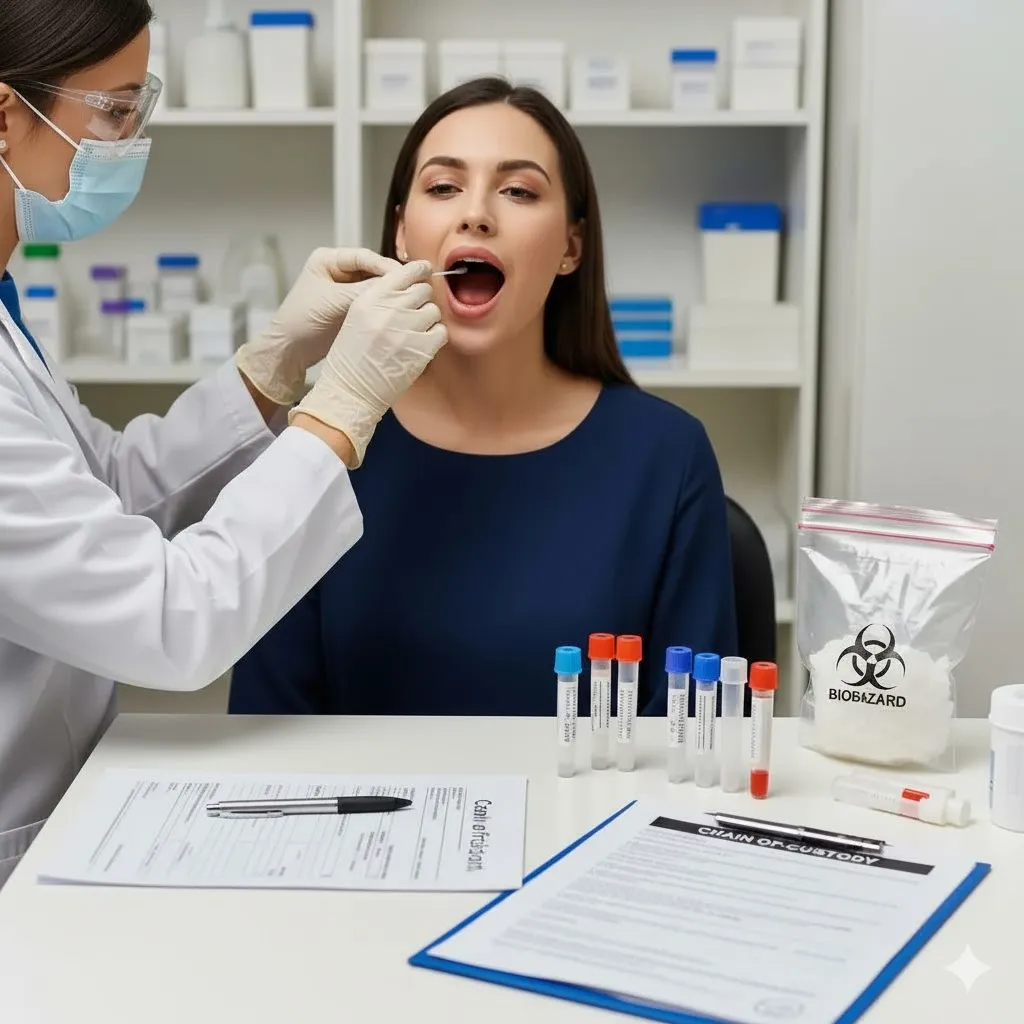
A reliable parental DNA workflow follows a clear sequence: schedule and verify identity, collect non-invasive samples with chain-of-custody documentation, perform laboratory analysis using validated genotyping methods, complete quality review and interpretation, and deliver results securely. This step-by-step approach preserves traceability and reduces the risk of pre-analytical errors that could invalidate findings. We keep clients informed at each stage—who must be present for legal tests, how samples are labeled and transported, and what checks occur before a final report is released—so you can plan logistics and expectations.
Booking and identity verification: schedule an appointment and present required identification for legal tests.
Sample collection: trained staff collect buccal swabs or other accepted specimens following protocol.
Chain-of-custody and transport: samples are labeled, sealed, and tracked to the laboratory.
Laboratory analysis and QA: genotyping, controls, and verification steps ensure result quality.
Result reporting: secure delivery of a documented report suitable for the intended use.
This clear workflow defines responsibilities and timelines for both client and laboratory, helping to avoid surprises and reduce rework.
What are the steps involved in Healthline's DNA sample collection?
Collection is usually non-invasive: after identity checks, trained personnel use buccal swabs to collect cheek cells while following procedures that prevent contamination and ensure enough DNA is obtained. For legal or immigration tests, collection is witnessed and documented with signatures and chain-of-custody forms to establish provenance; the witness is a designated laboratory staff member who verifies identity and seals specimens. Each package is labeled with unique identifiers and transferred to the lab under secure tracking procedures. Clients are advised to avoid eating or drinking briefly before swabbing. Clear instructions and correct sampling reduce the chance of inadequate specimens and the need for re-sampling.
Knowing these practical steps helps participants prepare and supports reliable analysis and reporting.
How long does it take to receive DNA test results from Healthline?
Turnaround time varies by test type, sample quality, and whether extra verification is needed. Peace-of-mind tests without legal protocols typically complete faster than legally admissible tests that include additional documentation and handling. Factors that can extend processing include insufficient DNA requiring re-collection, confirmatory testing for ambiguous results, and administrative time for chain-of-custody processing. Specific schedules and expedited options depend on current laboratory workload, so confirm expected timelines when booking and plan for possible delays if results are needed for time-sensitive legal or immigration matters.
If you need rapid processing for urgent legal or travel reasons, discuss expedited options and required documentation when arranging the appointment.
How does Healthline guarantee confidentiality and privacy in DNA testing?
Confidentiality rests on limited data access, secure specimen storage, and controlled result delivery that minimize unnecessary exposure of genetic information. Laboratories use role-based access controls for electronic records, physical security for specimen storage, and procedures to separate personal identifiers from analytical data when appropriate. Secure reporting channels and explicit consent forms define who may receive results, and retention policies set how long records are kept and when they are destroyed. These safeguards build trust and ensure genetic information is handled with appropriate care.
Role-based access: only authorized staff can view identifiable patient records.
Secure storage: specimens and electronic data are kept in controlled-access facilities.
Limited result distribution: reports are released only to designated individuals with consent.
These layered protections help clients verify how their data and samples are managed.
What measures does Healthline take to protect patient data?
Typical protections include administrative controls—staff training and written privacy policies—technical safeguards such as encrypted electronic records and access logs, and physical measures like secure specimen storage and controlled laboratory entry. Combined, these steps reduce the risk of unauthorized access, accidental disclosure, or sample tampering. Clients can request the laboratory’s privacy policy or data-handling statement to learn retention periods, who may access results, and how to request corrections or deletions. Transparency about these practices reassures clients that genetic information is managed in line with accepted confidentiality standards.
Ask specific questions about data encryption, access audits, and retention timelines to confirm the laboratory’s procedures meet your personal and legal expectations.
Is Healthline's DNA testing process compliant with Sri Lankan privacy regulations?
Compliance means aligning laboratory practices with applicable national rules on medical records, patient privacy, and data protection, and keeping documentation that demonstrates adherence to legal and laboratory standards. Specific certifications or legal attestations should be confirmed directly with the provider; clients can verify compliance by requesting written statements about regulatory adherence and reviewing the laboratory’s privacy policy. Participation in external proficiency testing and use of recognized quality frameworks also offer indirect evidence of governance and oversight. Confirming these details with the testing provider ensures results and records are handled in line with local regulatory expectations.
Requesting compliance documentation during intake helps clients assess whether the laboratory operates consistently with their legal and privacy needs.
Why is Healthline the trusted choice for parental DNA tests in Sri Lanka?
Trust in a parental DNA provider comes from clear laboratory standards, transparent procedures, local accessibility, and recognized authorizations for intended uses such as foreign employment or immigration. Healthline Medical Diagnostic Pvt Ltd is an established diagnostics provider in Kalubowila with modern facilities and is listed among authorized providers for foreign employment medicals—an indicator of institutional capability in regulated testing processes. Local presence reduces logistical complexity for sample submission and identity verification, while standardized procedures and documented QA practices help ensure results are defensible when required. These signals support choosing a reputable provider for sensitive genetic testing.
When evaluating any provider, examine procedural transparency, documented QA practices, and local accessibility in light of your specific legal or personal needs.
How does Healthline meet international quality and accreditation standards?
Meeting international quality expectations involves running a quality management system, participating in external proficiency testing, and maintaining detailed standard operating procedures that ensure consistent analytical performance. Specific accreditation claims should be verified directly with the laboratory, but important quality features include regular instrument calibration, staff competency records, participation in proficiency schemes, and documented corrective-action processes. These practices show the laboratory monitors performance and addresses deviations, which is vital for the validity and repeatability of results. Request evidence of participation in quality programs to confirm adherence to accepted laboratory standards.
Asking for documentation about quality systems and external proficiency participation helps clients confirm that testing processes meet expected international benchmarks.
What do customers say about Healthline's DNA testing services?
Aggregated and consented feedback typically highlights themes such as timeliness, professionalism during collection, clarity of reports, and privacy practices; these patterns are more informative than single anecdotes. Potential clients should review the provider’s public business profile or on-site testimonials to understand common experiences and note whether reviewers mention factors relevant to their needs—legal acceptability, speed of results, and staff conduct. Summarized customer feedback can clarify typical strengths and flag areas where additional questions are helpful before booking. Relying on aggregated patterns rather than individual reviews provides a balanced view of service reliability.
Checking independently posted reviews and verified testimonials helps prospective clients form realistic expectations about process and service quality.
What are the costs and affordability options for Healthline's parental DNA tests?
Cost depends mainly on test type (peace-of-mind versus legal/immigration), number of participants, required documentation and witnessing, and any expedited processing; additional factors include confirmatory testing or international courier fees if applicable. Because pricing varies with these variables, providers usually give quotes tailored to the chosen test type and procedural needs rather than a single flat price. Transparent pricing includes a clear breakdown of what the fee covers—collection, laboratory analysis, documentation, and report issuance—and whether extra services such as notarized reports or additional copies cost more. Prospective clients should request a written quote listing included services and potential add-ons to avoid unexpected fees.
The table below outlines common cost drivers and their practical effects to help clients budget realistically.
Cost Driver | Why It Matters | How It Affects Price |
Test type (peace-of-mind vs legal) | Legal tests require witnessed sampling and documentation | Legal tests usually cost more because of added procedures |
Number of participants | More samples increase analysis and handling | Each extra participant raises analytical workload |
Expedited processing | Faster turnaround uses prioritized lab resources | Expedited requests may carry a surcharge |
Documentation needs | Notarized or specialized reporting requires extra admin work | Additional paperwork can add to the fee |
How does Healthline price its DNA testing services in Sri Lanka?
Pricing typically reflects the laboratory’s costs for analysis, staffing for witnessed collections, administrative work for chain-of-custody documentation, and any logistics such as secure transport or specialized reporting. Because these components vary by case complexity, reputable providers supply itemized quotes on request and clarify whether re-tests, additional participants, or international document notarization are included. Ask the provider for a written estimate that specifies included services, expected turnaround, and optional add-ons. This ensures informed decision-making and helps avoid surprises when reports are issued.
Requesting an itemized price estimate before booking lets clients compare providers fairly and confirm that required legal documentation is included.
Are there transparent pricing and no hidden fees at Healthline?
Transparent pricing means a provider gives a clear written estimate listing each fee component—collection, laboratory analysis, documentation, and optional services—and explains when additional charges may apply. Clients should ask for written confirmation of refund, re-test, and cancellation policies, and verify whether expedited services or international documentation carry extra costs. Clarifying these details before scheduling a collection appointment helps ensure fees are predictable and aligned with needs. Clear communication about pricing and policies reduces the risk of unexpected charges and builds confidence in the testing process.
When preparing to book, obtain a written quote that outlines what is included and ask for clarification about any potential supplemental fees.
Conclusion
Choosing Healthline for parental DNA testing ensures accurate and reliable results backed by stringent quality controls and advanced technology. Our comprehensive services cater to various needs, from peace-of-mind tests to legally admissible options, providing families with the clarity they seek. By understanding the testing process and its implications, you can make informed decisions that align with your specific requirements. Contact us today to learn more about our offerings and schedule your appointment.
Frequently Asked Questions
What should I consider when choosing a parental DNA testing provider?
When selecting a parental DNA testing provider, consider factors such as accreditation, laboratory quality standards, and the range of services offered. Look for providers with transparent procedures, a strong reputation, and positive customer feedback. Additionally, ensure they have robust privacy policies and data protection measures in place. It's also important to verify their experience with legal and immigration tests if you require results for official purposes. Asking about turnaround times and pricing transparency can further help you make an informed decision.
Can I use a peace-of-mind DNA test for legal purposes?
No, peace-of-mind DNA tests are generally not legally admissible. These tests are designed for personal knowledge and do not follow the strict protocols required for legal testing, such as witnessed sample collection and chain-of-custody documentation. If you need results for legal matters, such as court cases or immigration, you should opt for a legally admissible test that meets all necessary requirements. Always confirm the test type with your provider to ensure it aligns with your needs.
What happens if the DNA test results are inconclusive?
If DNA test results are inconclusive, the laboratory may recommend additional testing or retesting to clarify the findings. Inconclusive results can occur due to insufficient DNA quality, contamination, or other technical issues. It's essential to discuss the implications of inconclusive results with your provider, who can guide you on the next steps. They may suggest collecting new samples or using additional relatives to improve the statistical resolution of the test. Understanding the reasons behind inconclusive results can help manage expectations.
How can I prepare for a DNA sample collection appointment?
To prepare for a DNA sample collection appointment, avoid eating or drinking for at least 30 minutes before the test to ensure optimal sample quality. Bring valid identification, especially for legal tests, and ensure all participants are present if required. Familiarize yourself with the testing process by asking your provider about what to expect during the appointment. Following any specific instructions given by the laboratory can help minimize the risk of contamination and ensure a smooth collection process.
What is the significance of chain-of-custody in DNA testing?
The chain-of-custody is crucial in DNA testing, especially for legal and immigration purposes, as it establishes a documented trail of the sample from collection to analysis. This process ensures that the sample remains secure and unaltered, preventing tampering or substitution. Proper chain-of-custody procedures include witnessed sample collection, identity verification, and sealed packaging. Adhering to these protocols is essential for the results to be considered valid and admissible in court or by immigration authorities.
Are there any age restrictions for DNA testing at Healthline?
Yes, there are age restrictions for DNA testing, particularly for minors. Generally, parental consent is required for individuals under the age of 18. For legal tests, both parents may need to be present during the sample collection process. It's important to check with Healthline regarding their specific policies and requirements for testing minors. Understanding these regulations can help ensure a smooth testing experience and compliance with legal standards.
What should I do if I have more questions about the DNA testing process?
If you have additional questions about the DNA testing process, it's best to contact the testing provider directly. Healthline offers customer support to address inquiries regarding their services, procedures, and any specific concerns you may have. You can also visit their website for detailed information or schedule a consultation to discuss your needs. Being proactive in seeking information can help you feel more confident and prepared for the testing process.
Comments